
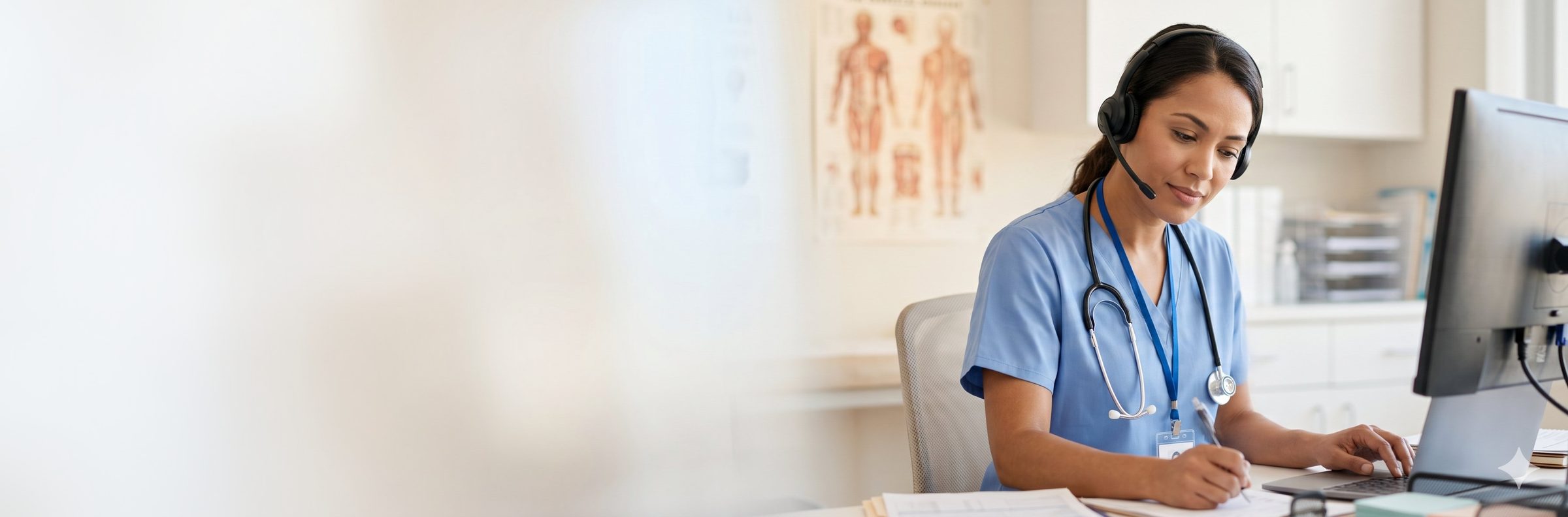
The modern healthcare experience is more advanced than ever, but for a patient trying to navigate it, it can feel isolating. Between patient portals, automated phone trees, and AI chatbots, the system is built for efficiency. When a patient is feeling unwell, confused, or overwhelmed, efficiency cannot replace empathy. This is where the human side of remote patient monitoring matters most, and it is the part of care that no algorithm can replicate.
At Vivo Care, technology is the tool we use to connect. The human voice is what actually delivers the care. In this issue of Moments That Matter, we look at the simple, profound relief patients feel when they realize a real, dedicated person is on the other end of the line.
Why a Real Voice Matters Most in Remote Care
The relationship is not a nice-to-have. It is what makes a remote care program work over time. When a patient trusts the person calling them, they answer the phone, they share what is really going on, and they stay enrolled. That continuity is measurable. Across the Vivo Care network, active remote patient monitoring participants average more than 17 months of continuous enrollment. People stay because someone they trust is paying attention.
Our care navigators are U.S.-based, state-licensed nurses who function as an extension of the provider team. They are not a call center. Each patient has a dedicated navigator, which is why the moments below happen at all. You cannot build this kind of trust through an automated menu.
The Featured Moment: “You’re a Real Person!”
Sometimes the most valuable thing a care navigator can do is simply answer the phone.
Diane reached out to a patient for a routine monthly check-in. When the patient answered, Diane could immediately hear the exhaustion and sarcasm in her “hello.” Diane responded warmly, and the patient practically shouted with relief:
Oh my gosh, you’re a real person!Vivo Care Patient
The patient explained that she had spent two days trying to get a simple scheduling question answered, caught in a loop of automated recordings she found entirely unhelpful. She had lost Diane’s direct number and was thrilled that Diane had proactively called her. Diane listened, sent an internal message to the clinic to get the issue sorted, and stayed on the line while the patient saved her direct number. The relief in the patient’s voice was clear. Not because a complex medical mystery was solved, but because she finally felt heard.
The Lighter Side of Connection
A one-to-one, relationship-driven model is not only about vital signs and care plans. It leaves room for the lighter, uniquely human moments that build lasting trust. These are a few from recent calls.
- The Dad Joke. During a morning call, Jamie’s patient asked if she wanted to hear a dad joke. When she agreed, he asked for the definition of “benign.” Jamie offered the clinical definition, but the patient corrected her: “Oh no, that’s too medically defined. Benign is what you are after you be eight.”
- The Macho Man. While Eva was carefully reviewing routine foot care and safety education with a retired Army Sergeant, he stopped her with a laugh: “Now Eva, you know I’m a macho man and I’m not in my pedicure era.” A brief, funny exchange that showed the patient felt comfortable enough to be himself.
- The Unexpected Alert. Isabel reached out to a patient after noticing a sudden, unexpected spike in weight on the patient’s remote scale. She gently asked if the scale might have been bumped. The patient realized the culprit at once: “Oh! That was my cat, Bert! I wondered how much he weighed. He saw me get on it, then he followed.”
That last moment is worth pausing on. The weight spike was caught because a navigator was watching the data and picked up the phone. The physiologic monitoring flagged something. The human confirmed what it meant. That is the model working exactly as designed.
Technology Plus a Human Is the Difference
An algorithm can record a vital sign, but it cannot laugh at a dad joke. A portal can send a reminder, but it cannot reassure a frustrated patient that they are finally speaking to someone who can help. The data tells you something changed. A person tells you what to do about it, and makes the patient feel cared for in the process.
This is the heart of the Vivo Care approach to Remote Patient Monitoring (RPM) and Chronic Care Management (CCM). The platform handles the monitoring. The care navigators handle the people. For practices, that combination shows up as steadier engagement and stronger retention. For patients, it shows up as a real voice when they need one.
Want to learn how a dedicated remote care clinical team can strengthen your programs and keep patients engaged?
Frequently Asked Questions
Who are Vivo Care’s care navigators?
Vivo Care’s care navigators are U.S.-based, state-licensed nurses who work as an extension of the provider team. Each patient is supported by a dedicated navigator who handles outreach, monitoring, and care coordination, not an automated system or a rotating call center.
Does remote patient monitoring replace human care?
No. Remote patient monitoring uses connected devices to capture physiologic data, but the clinical judgment and patient relationship come from a licensed nurse. The technology surfaces what changed. The care navigator determines what it means and acts on it.
Why does a dedicated care navigator improve patient retention?
Patients stay enrolled when they trust the person calling them. A consistent, single point of contact builds that trust over time. Across the Vivo Care network, active remote patient monitoring participants average more than 17 months of continuous enrollment.