
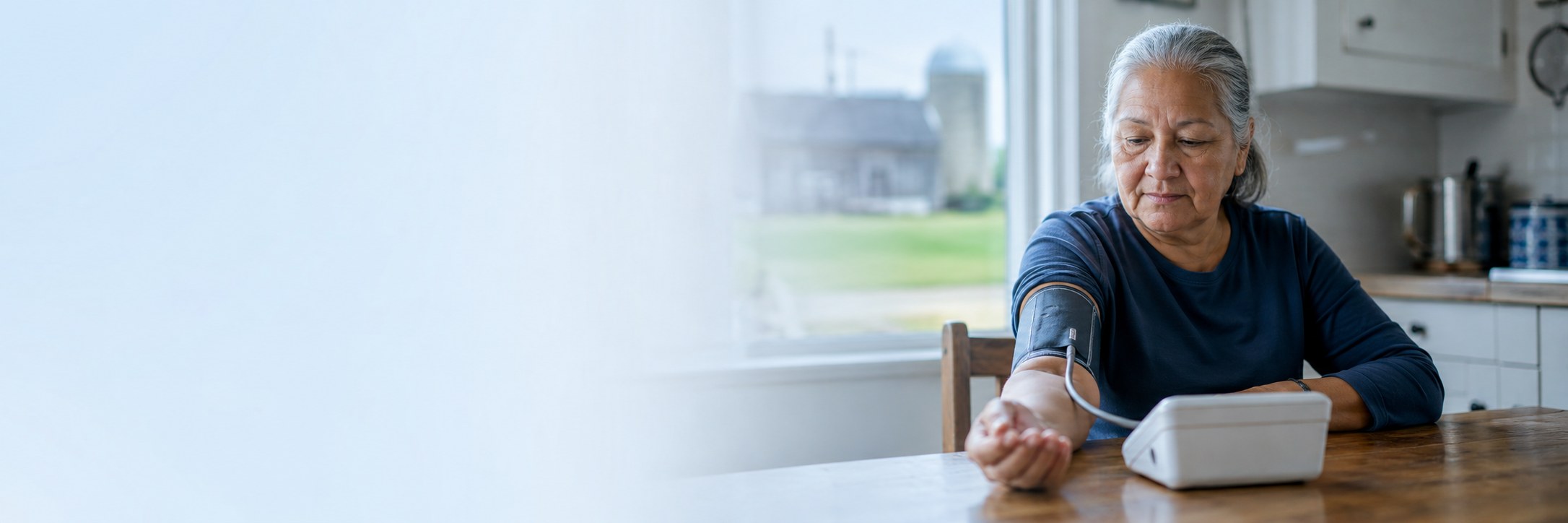
A patient with hypertension leaves the clinic with a plan and a follow-up date three months out. She lives 90 miles away, on a county road that turns to gravel before it reaches her house. Between now and that next visit, her blood pressure will climb, level off, spike on a hard week, and settle again. Her care team will see none of it. They will see one reading, taken in an exam room, on the day she happens to come in. Remote patient monitoring (RPM) for rural health is built for exactly this gap, the weeks between visits when a chronic condition drifts and no one is watching.
Distance is the biggest threat to rural chronic care
Chronic disease is managed day to day, at home, across the weeks and months between appointments. Where the nearest clinic is an hour or more away and visits are infrequent, the care team is working from a snapshot while the disease moves like a film. Rural and frontier panels carry some of the highest diabetes and hypertension burden in the country, and they are the hardest to keep eyes on. Distance is not a scheduling inconvenience. It is the clinical problem.
How remote patient monitoring closes the 90-mile gap
Remote patient monitoring closes that distance. Connected devices in the patient’s home capture physiologic readings and transmit them to the care team without the patient driving anywhere. The readings arrive between visits, when the decisions actually get made.
In practice, that means capturing the vitals that drive chronic disease, right at the kitchen table:
- Blood pressure for hypertension
- Blood glucose for diabetes
- Weight for heart failure
- Blood oxygen for COPD and other respiratory conditions
Connectivity is part of the fit. Many frontier homes have no reliable internet, so cellular-enabled devices transmit readings over the cellular network, with no home WiFi or smartphone required. A cellular gateway option covers homes with no connectivity at all. The patient takes a reading. The data moves on its own.
Device abandonment is the number one reason RPM programs fail. Across the Vivo Care platform, patients average 545 days of retention, roughly eighteen months of continuous monitoring.Vivo Care platform data
Why raw data is just noise (and how care navigators fix it)
A stream of raw numbers into the chart is not monitoring. It is noise waiting for someone to notice it. What makes a reading matter is the layer on top of it.
At Vivo Care, that layer is the care navigator. Care navigators review incoming physiologic data, flag the readings trending the wrong way, and hand the provider an interpreted, triaged summary rather than a data dump. The hypertensive patient 90 miles out whose numbers drift upward over ten days is not waiting for her next appointment to be seen. She is surfaced now, to her provider, who decides what happens next. The provider stays the decision-maker throughout. Care navigators extend the team. They do not replace clinical judgment.
Coordination extended into the home, not more admin
This is care coordination the practice already believes in, extended into the home. It is documented monitoring, not added administrative work, and for a rural panel with high chronic disease burden it reaches the patients who are hardest to keep eyes on.
A program that pays for itself
A documented program is also a reimbursable one. Medicare has covered RPM for years through established CPT codes: 99453 for setup and patient education, 99454 for device supply and data transmission, and 99457 and 99458 for the monthly care-management time. The 2026 Physician Fee Schedule added two shorter-window codes, 99445 for 2 to 15 days of device data and 99470 for 10 to 19 minutes of management, billed in place of 99454 and 99457 in lighter months. Billed each month a patient is monitored, RPM is designed to be financially self-sustaining rather than a line item, which for a thin-margin rural practice can be the difference between piloting a program and committing to one.
The billing mechanics depend on your clinic type. A standard physician practice bills these codes directly. Rural Health Clinics and Federally Qualified Health Centers historically billed care management through a single bundled code, G0511, but that bundle is retiring, so RHCs and FQHCs now bill the individual RPM codes. Those clinics should confirm their current pathway before modeling the numbers, and we can run your specific panel with you.
Two ways to run it, based on your staffing
Practices run RPM one of two ways, based on staffing bandwidth:
- Managed Clinical. Vivo Care care navigators handle the monitoring and hand an interpreted summary back to the provider. Built for practices that want to scale without adding headcount.
- Self-Managed. The practice runs the Vivo Care platform in-house. Built for practices with an existing care coordination team that wants full control.
Neither is better or worse. The right choice depends on staffing and bandwidth, and the provider stays the decision-maker either way. For rural and frontier providers, the appeal is direct. The patients who are hardest to monitor, the ones far from the clinic managing chronic disease mostly on their own, are the ones RPM was built to reach. Distance stops being the reason a deteriorating patient goes unseen.
Proof from a rural practice
Lake Oconee Primary and Urgent Care Center, a family and urgent care practice in Eatonton, Georgia, ran into exactly this problem. Before RPM, the team saw many chronic patients only every three to six months, too rarely to manage hypertension or diabetes from a reading or two a year. With Vivo Care, the practice enrolled more than 130 patients across five ordering providers, and over 70 percent now take 16 or more readings a month. Ninety-four percent are billable for 99457, the monthly management code, which is the engagement that makes a program both clinical and sustainable.
Before RPM, we were only able to see patients every 3-6 months in office. Now we have the information to see how they’re doing each day.Tori McDerment, RPM Lead, Lake Oconee Primary and Urgent Care Center, Eatonton, GA
Curious what a documented RPM program could return across your Medicare panel? Book a short walkthrough and we will run your numbers with you.
Frequently asked questions
Does remote patient monitoring work without home internet?
Yes. Cellular-enabled devices transmit readings over the cellular network, so patients do not need home WiFi or a smartphone. A cellular gateway option covers homes with no connectivity at all.
Is remote patient monitoring reimbursed for rural health clinics?
Yes. Medicare reimburses RPM through CPT codes 99453, 99454, 99457, and 99458, plus the 2026 shorter-window codes 99445 and 99470. Rural Health Clinics and Federally Qualified Health Centers bill Medicare under their own rules, and as the bundled G0511 code retires they now bill the individual codes, so those clinics should confirm their current pathway. Once patients are enrolled and monitored, the program is designed to be financially self-sustaining.
Which rural patients benefit most from RPM?
Patients managing chronic conditions between infrequent visits, hypertension and diabetes chief among them, especially those who live far from the clinic. The greater the distance and the higher the disease burden, the more monitoring adds.
Does RPM add work for a small rural practice?
In the Managed Clinical model, Vivo Care care navigators do the monitoring and hand the provider an interpreted, triaged summary, so the practice adds oversight, not administrative load. In the Self-Managed model, the practice runs the platform itself. The provider stays the decision-maker either way.
What conditions can RPM monitor at home?
Common ones include blood pressure for hypertension, weight for heart failure, blood glucose for diabetes, and blood oxygen for respiratory conditions. The provider decides which readings a patient takes and how often.
How does RPM reduce travel for rural patients?
Readings are captured at home and reviewed remotely, so a trending problem is caught between visits without a long drive. The patient comes in when the data says it matters, not just on the calendar.